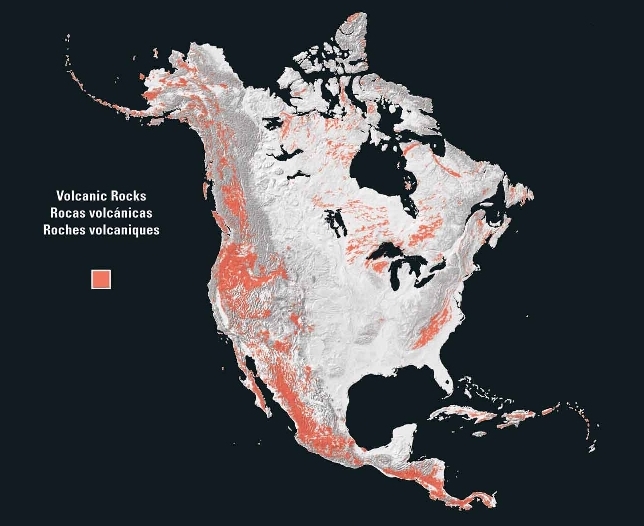
basalt
Basalt is a hard gray or black, mafic igneous volcanic rock that is usually fine-grained due to rapid cooling of lava, though it contain larger crystals in a fine matrix (porphyritic), be vesicular, or be a frothy scoria.
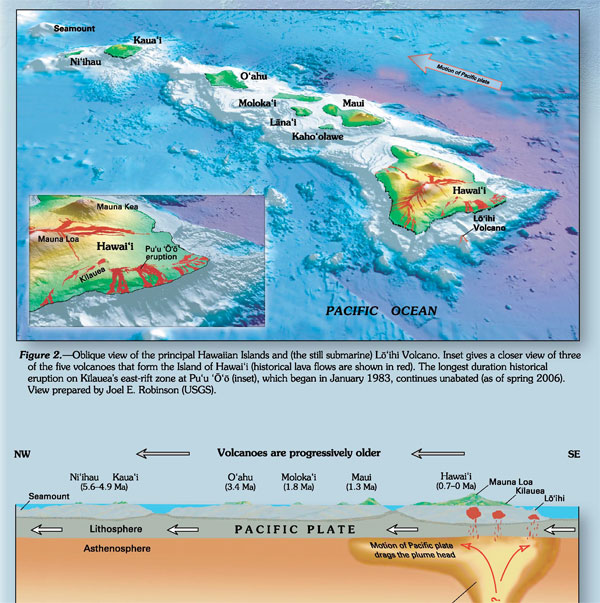
 Basalt magmas form by decompression melting of peridotite in the mantle. The crustal portions of oceanic tectonic plates comprised predominantly basalt, derived from upwelling peridotite in the mantle below ocean ridges. The basalt shield volcanoes of the Hawaiian island chain sit above a mantle plume, or 'hot spot'. (left - click to enlarge - aa flows over ropey pahoehoe in Hawaii - image courtesy of USGS.)
Basalt is TAS classified according to the relationships between the combined alkali content and the silica content. Basalt typically containts a preponderance of calcic plagioclase feldspar and pyroxene; olivine can also be a significant constituent. Accessory minerals include iron oxides and iron-titanium oxides, providing basalt with a paleomagnetic signature.
Phaneritic, shallow intrusive igneous rocks with a basaltic composition are generally referred to as dolerite (also called diabase) or gabbro.
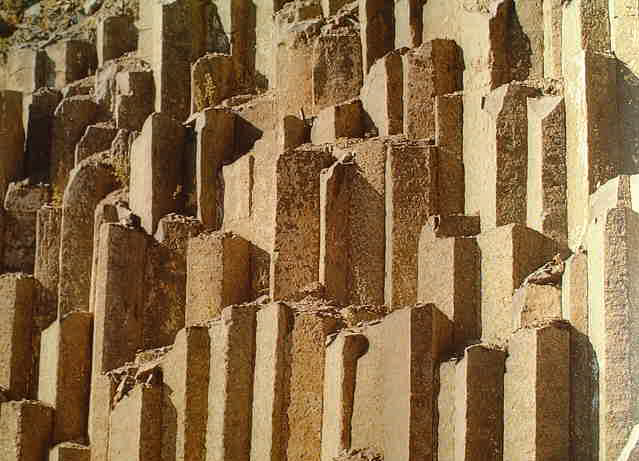
 (image left - click to enlarge - courtesy USGS - top-down: basaltic lava; lava field; flow-lines in basalt formation; close-up of vesicular basalt with olivine crystals; surface of basalt hand specimen; basalt columns.)
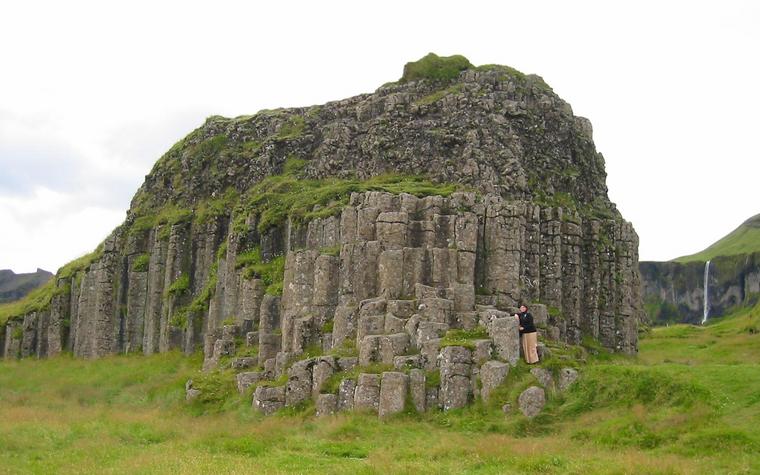
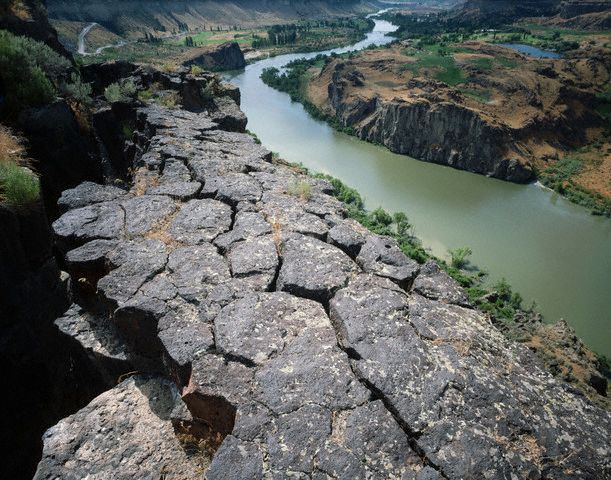
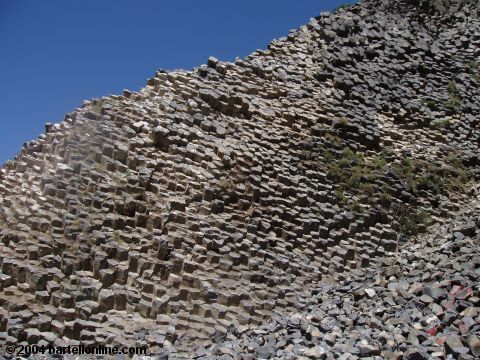
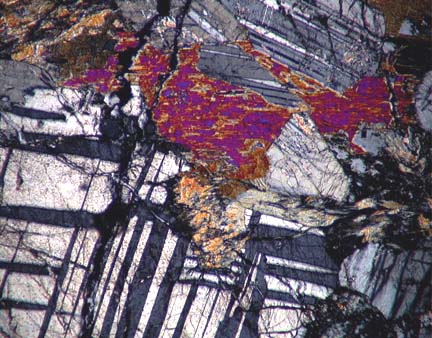
[images - roll-over link for preview (where available); large images (well worth a visit) show only as a corner on preview : water-sculpted basalt at Fossil Falls in Yosemite : Basalt Fall unterhalb des Hengifoss, basalt columns, Dverghamrar basaltic columns in Iceland, 2 : cliff of basalt columns : Columbia River basalts, Catherine Creek arch in Miocene columnar basalts : flowing curves of basalt entablature in Yellowstone : basalt columns Armenia : basalt field : basalt and sandstone : 3.7 Ga moon-rock basalt : hand-specimen : hand-specimen vesicular basalt, vesicular basalt with olivine phenocrysts, 2 : hand-specimen diabase : hand-specimen diabase porphyry : hand-specimen diorite : hand-specimen gabbro : hand-specimen scoria : thin-section basalt, 2, 3; thin-sections moon basalts ]

 Basalt magmas form by decompression melting of peridotite in the mantle. The crustal portions of oceanic tectonic plates comprised predominantly basalt, derived from upwelling peridotite in the mantle below ocean ridges. The basalt shield volcanoes of the Hawaiian island chain sit above a mantle plume, or 'hot spot'. (left - click to enlarge - aa flows over ropey pahoehoe in Hawaii - image courtesy of USGS.)
Basalt is TAS classified according to the relationships between the combined alkali content and the silica content. Basalt typically containts a preponderance of calcic plagioclase feldspar and pyroxene; olivine can also be a significant constituent. Accessory minerals include iron oxides and iron-titanium oxides, providing basalt with a paleomagnetic signature.
Phaneritic, shallow intrusive igneous rocks with a basaltic composition are generally referred to as dolerite (also called diabase) or gabbro.
 (image left - click to enlarge - courtesy USGS - top-down: basaltic lava; lava field; flow-lines in basalt formation; close-up of vesicular basalt with olivine crystals; surface of basalt hand specimen; basalt columns.)
[images - roll-over link for preview (where available); large images (well worth a visit) show only as a corner on preview : water-sculpted basalt at Fossil Falls in Yosemite : Basalt Fall unterhalb des Hengifoss, basalt columns, Dverghamrar basaltic columns in Iceland, 2 : cliff of basalt columns : Columbia River basalts, Catherine Creek arch in Miocene columnar basalts : flowing curves of basalt entablature in Yellowstone : basalt columns Armenia : basalt field : basalt and sandstone : 3.7 Ga moon-rock basalt : hand-specimen : hand-specimen vesicular basalt, vesicular basalt with olivine phenocrysts, 2 : hand-specimen diabase : hand-specimen diabase porphyry : hand-specimen diorite : hand-specimen gabbro : hand-specimen scoria : thin-section basalt, 2, 3; thin-sections moon basalts ]
Labels: basalt, diabase, dolerite, gabbro, lava, ocean ridges, peridotite, porphyritic, scoria, vesicular
| 0 Guide-Glossary