Geology

Definitions and images to illustrate geological terms, links to images and website articles

mélange

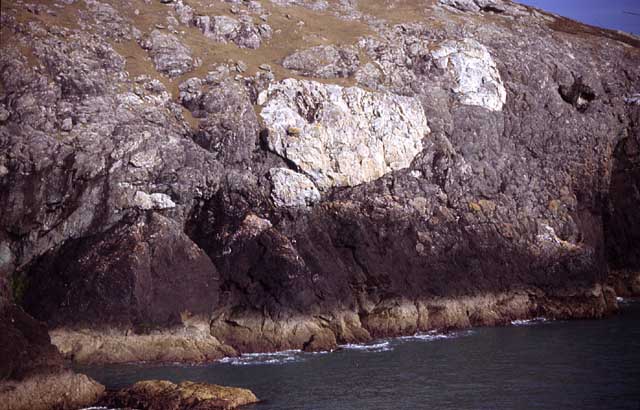
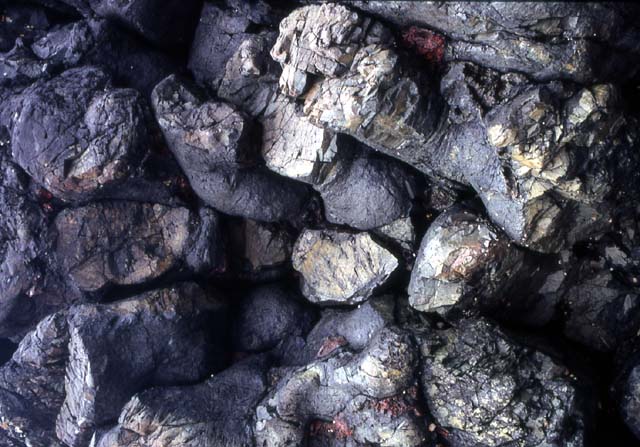
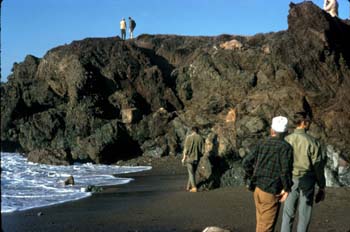
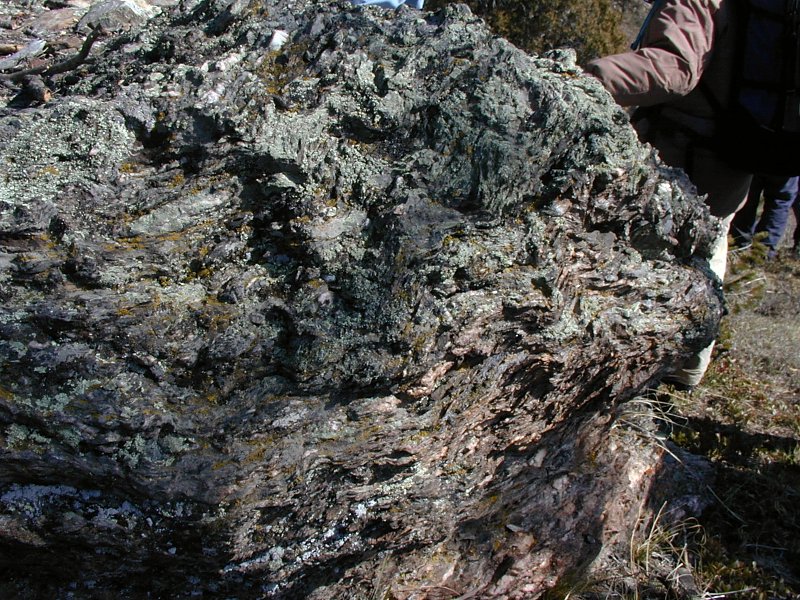
3D image looking down on Point Bonita, CA - part of the Franciscan mélange - a mix of late Mesozoic metabasalts, sandstone, and conglomerates. Courtesy USGS A mélange is a mappable-sized, breccia containing varied rocks jumbled together with little continuity of contacts. The diverse blocks within a mélange are supported and separated by a matrix of fine grained material (typically shale, slate, or serpentinite) with a tectonic fabric. Mélanges originate either as components of tectonic accretionary prisms, as a result of gravitational submarine sliding (olistostromes), or through diapirism (diagram).

An olistostrome, or "gravitational mélange", is a mappable, chaotic sedimentary deposit composed of heterogeneous olistoliths (blocks) derived from submarine gravity siliding or slumping of unconsolidated sediments. Such slides may have traveled several dozen to several hundred kilometers, resulting in large, thick, heterogeneous stratiform units that accumulated somewhat chaotically from an active fault escarpment, in various tectonic settings.

Olistostromes may range from several meters up to several hundreds of meters thick, and component olistoliths (blocks)may have preserved their internal coherence to the extent that the original facies can still be established. Olistoliths are immersed in a fine-grained matrix (typically mudstone or serpentinite).

Olistostromes are mélanges formed by semi-fluid accumulation of submarine, gravitational flow. Slide masses composed of hard rocks plus semi-indurated and soft sediments fail when the softer and friable materials form a basal mobile phase. Such a slide may even have liquefied and progressively disintegrated during displacement. So, olistostromes are stratigraphic units with chaotic bedding or without true bedding, yet which are intercalated between normal sedimentary bedding sequences.

[links: images: formations: mélanges: tectonic mélange rocks; melange enclosed in dark matrix of serpentinite and containing a block of S-type, coarse granite, eastern flank of the Cordillera Occidental; a mélange is a mappable body of rock that includes fragments and blocks of all sizes, embedded in a generally sheared matrix; Franciscan mélange, another, Central Valley; Franciscan mélange - isolated blocks of resistant Franciscan rocks of various types (known as knockers) mixed into a sheared mudstone matrix; 3D of Point Bonita, Kirby Cove; mélange, Marin headlands, another, and close-up of mélange with chert clasts; close-up of disarticulated Hartland granofels block in a tectonic mélange near Cameron’s Line; mélange close-up; close-up of fragment of greenstone in mud-rich mélange, Malua Bay, south of Batemans Bay, south coast of New South Wales, fragments of sandstone in mud-rich mélange, Garden Bay, near Malua Bay, small fragments in mud-rich mélange, Sunshine Bay, south of Batemans Bay, chert mélange from the southern side of Burrewarra Point, south of Batemans Bay; exotic breccia blocks, eroded from the Hoh mélange, near Goodman Creek, 2; mélange, Kiryu-Kurohone Complex, Japan; tectonic mélange at the base of a large thrust sheet of Bravo Lake volcanic rocks; quartzite blocks in Gwna Mélange, Llyn Peninsula and Anglesey, Wales, and pillow-basalts, Porth Dinllaen ; Dunnage Mélange near Gander, Newfoundland; mélange, Nfld; Cretaceous rock in mélange in CA; thrust fault composed of imbricated structure, coherent and mélange facies, shear fabrics, Japan; amphibolite-grade mélange in Catalina Schist; olistrosomes: olistrosome; olistostromes (brownish strata in lower part of hillside) and ophiolites (dark material in upper part of section) exposed in eastern Cuba; webpages: trenches and mélanges]

Labels: , , , , , , ,

shear zones

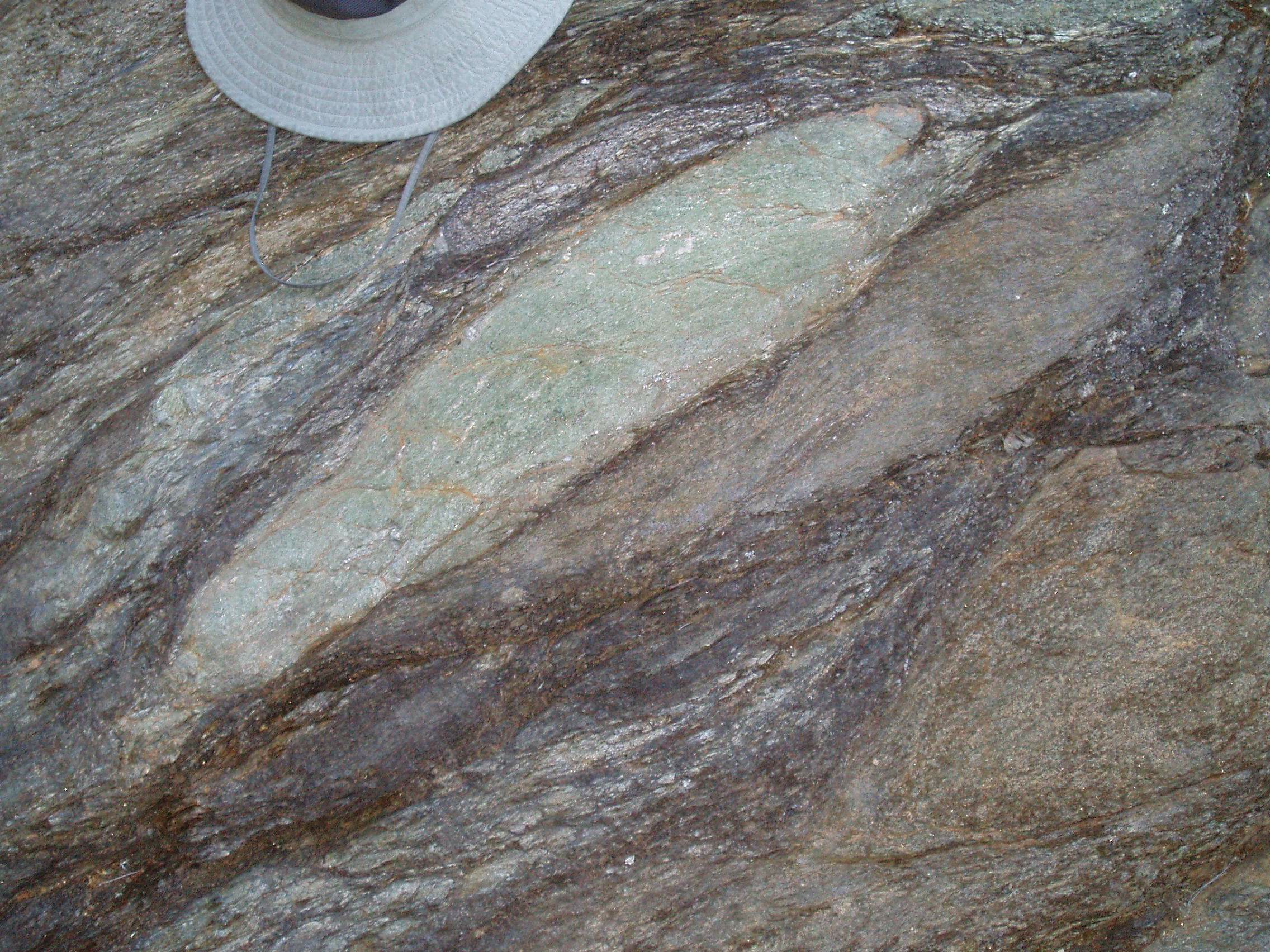
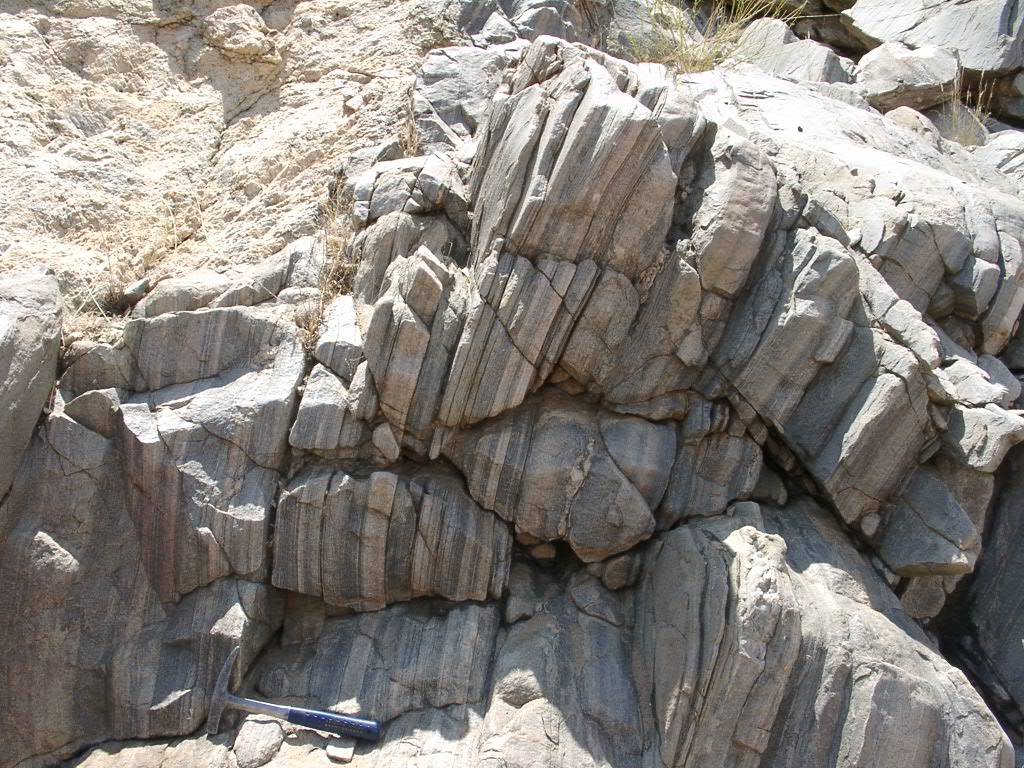
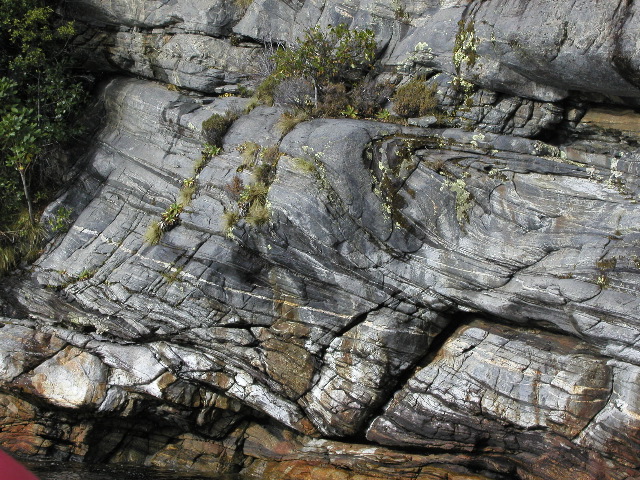
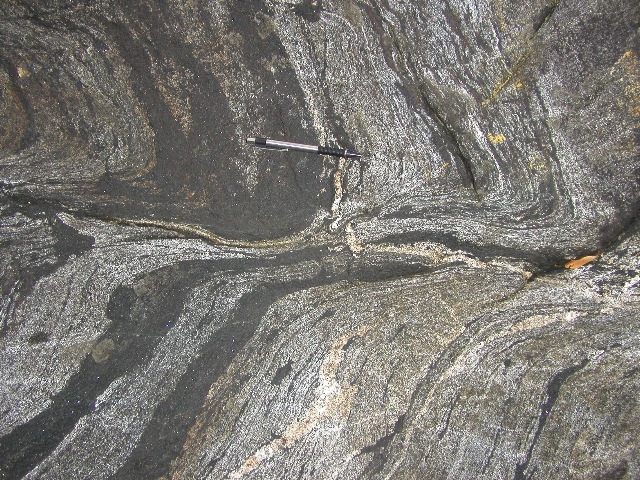
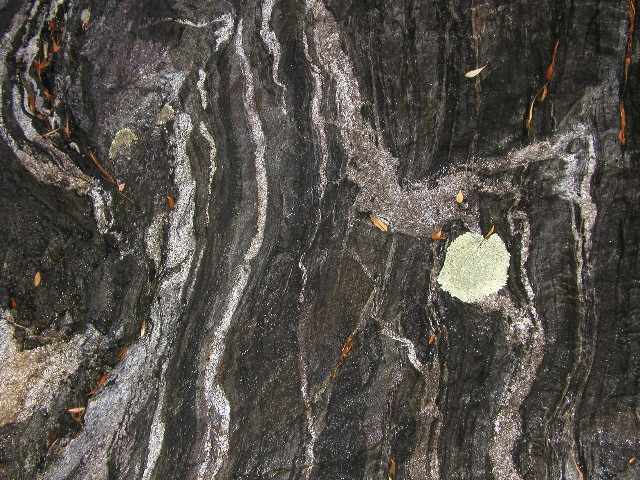
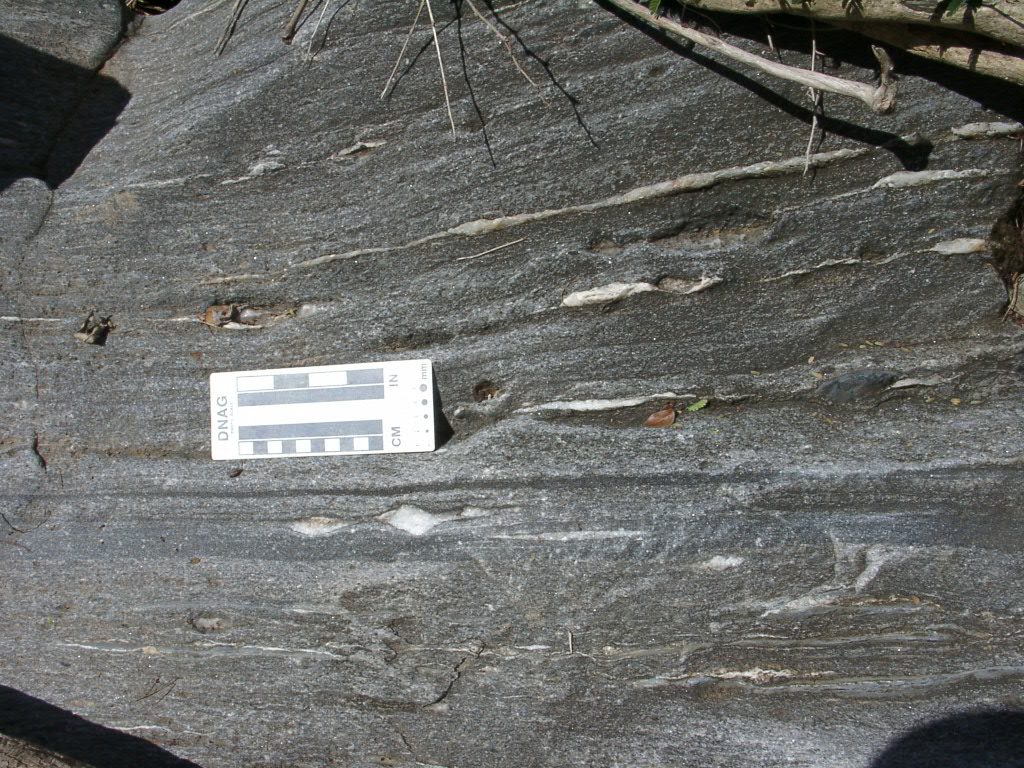
Shear zones involve volumes of rock deformed by shearing stress under brittle-ductile or ductile conditions, typically in subduction zones at depths down to 10-20 km. Shear zones often occur at the edges of tectonic blocks, forming discontinuities that mark distinct terranes. Shear zones can host ore bodies as a result of hydrothermal flow through orogenic belts, are commonly metasomatized, and often display some retrograde metamorphism from a peak metamorphic assemblage.

Close to the Earth's surface, cool rocks respond to tectonic stresses with fracture and faulting. At greater depths than ductile shear zones, migmatites result from high temperature/high pressure prograde Barrovian regional metamorphism, and at still higher temperatures, rocks melt to form magmas.

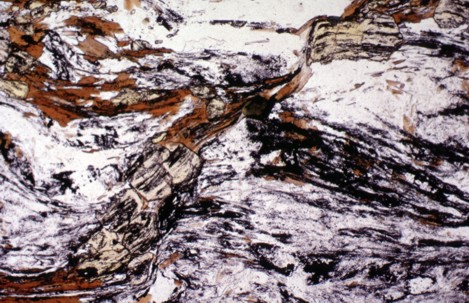
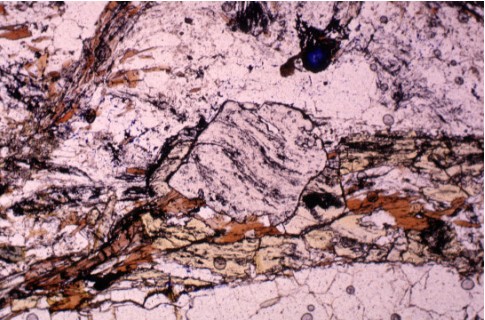
Transpression regimes, such as the Alpine Fault zone of New Zealand, form during oblique collision of tectonic plates and during non-orthogonal subduction. Transpression typically generates oblique-slip thrust faults, strike-slip faults, or transform faults. Microstructural evidence of transpressional regimes include rodding lineations, mylonites, augen-structured gneisses, and mica fish.

Transtension regimes are oblique tensional environments that result in oblique, normal geologic faults and detachment faults in rift zones. Microstructural evidence of transtension includes rodding or stretching lineations, stretched porphyroblasts, and mylonites.

Shear zones can extend from centimeters to several kilometres in width, and display deformation, folding, and foliations in dynamically altered rocks (breccias, cataclasites, mylonites, S-L-L-S breccia or cataclasite is formed, with the rock milled and broken into a mélange of random fragments.

Pseudotachylites form at depths from 5-10 km, where confining pressures are focused into discrete fault planes and are sufficient to prevent brecciation and milling. The frictional heating at these depths can melt the rock to form pseudotachylite glass or mylonite, and adjacent to these zones, can result in growth of new mineral assemblages.

At greater depths, angular breccias transform into ductile shear textures and mylonite zones, as ductile shear zones accommodate compressive stress through dislocation creep within minerals, fracturing of minerals and regrowth of sub-grain boundaries, or by lattice glide along preferred orientation foliation planes in phyllosilicates.

Within the depth range of 10-20km, ductile deformation conditions prevail and frictional heating is dispersed throughout shear zones, resulting in distributed deformation and a weaker thermal imprint. Here, deformation forms mylonites, with dynamothermal metamorphism observed rarely as the growth of porphyroblasts in mylonite zones.

subduction zone magmas

[links: images: animation: fabric in simple shear; shear zone experiment; formations: mylonitic migmatitic granite-gneiss in shear zone, Epupa Complex, S of Red Drum, NW Namibia; Golden Eagle Shear Zone, Yukon; melt enhanced shear zone, along the base of an intruding batholith; shear zone in the axial zone of the Pyrenees, Parc natural del Cap de Creus, Spain; dike cutting a shear zone, Snake Range, Nevada; sheath fold in boulder, Tarfala Valley, Sweden, and sheath folds, nSweden; fold in high strain zone, NZ; close-ups: ultramylonite core (~1 cm thick) from ductile shear zone of the Diana Syenite of the NW Adirondacks; shear zone related fold in the Kohistan Arc Complex, Northern Pakistan; rock texture in shear zone; rock in ductile shear zone; right-lateral, ductile shear zone; anorthosite in ductile shear zone, Adirondacks; close-up of dextral shear zone; leucosome cuts gneissic layering; 1.7 Ga foliated quartz monzonite of Boulder Creek batholith in Idaho Springs-Ralston shear zone with strong mylonitic (sheared) fabric that parallels the shear zone, 2, 3; 1.7 Ga metapelite (metamorphic marine claystone) that includes large porphyroblasts of pink quartz and andalusite (dull dark gray blocky crystals), and wavy alignment of porphyroblasts in this rock with a mylonitic fabric indicates a complex deformation history; with en echelon antithetic veins in dextral shear zone, Baraboo Quartzite; sigmoidal antithetic fractures in a dextral shear zone, Tiddiline Conglomerate, Bou Azzer inlier, Morocco; mylonitic marble in shear zone, Escambray Massif, Central Cuba; lower greenschist facies shear zone cutting basement schists, assymmetric clast of pegmatite, assymmetric pod of leucogranite in schist, ptygmatic folds of leucogranite in schist, assymmetric pod of schist, Cap De Creus, neSpain; thin-sections: thin section of Lower Ordovician Pinnak Sandstone showing multiple tectonic foliations, the most prominent of which is a crenulation cleavage that overprints an early fine foliation; euhedral staurolite (yellow pleochroic in PPL) overgrows shear zone between large light coloured plagioclase porphyroblasts (graphite inclusions outline shear zone, staurolite crystals postkinematic); garnet with spiral-shaped inclusion trails indicating synkinematic growth, and a dextral sense of shear; diagrams: cataclasite-mylonite in shear zone; block diagram - shear zone host for gold, geometric relationships between structural elements of zone and veins; region within macroscopic shear zone illustrating bimodal porosity distribution within shear zone; model of shear zone]

Labels: , , , , , , , , , ,

. . . evolving since 01/07/07